
3 things that decide if you win the bid. (And your price isn't one of them)
Clients judge your bid on 3 surprisingly simple moments. Yet most contractors overlook at least one.

“You were actually cheaper. We just felt like the other guys had it handled.”
That was the real reason one contractor lost the bid.
“Had it handled”
“You were actually cheaper. We just felt like the other guys had it handled.”
That was the real reason one contractor lost the bid.
“Had it handled”
It’s a feeling built in the few moments your client actually gets to see. And here’s why it matters:
They don’t see your last 50 jobs.
They don’t see how often you go above and beyond.
They don’t see the years you’ve spent perfecting your craft.
But they do see these 3 moments.
And most contractors are losing in at least one of them without even realising it.
1. The site visit: only one of them actually met the client
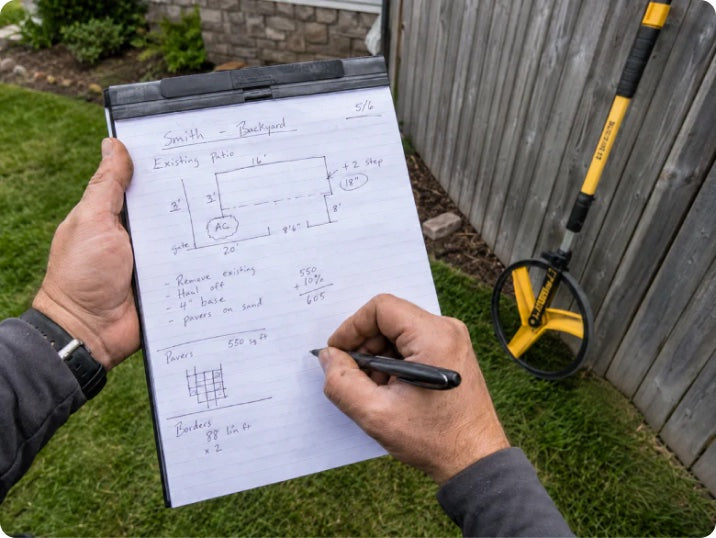
Time spent with your head in a notepad is time lost selling to the client
Picture two outdoor contractors. Both have been doing this for 16 years.
Contractor A arrives on site and gets straight into measuring.
Head down. Wheel clicking. Numbers scribbled into the notepad.
It feels efficient. But he’s missing something:
Contractor B measures the exact same yard but focuses on the client.
He points out to the client where the water runoff will go. He notices the one corner that catches the evening sun. He talks through how the finished space could actually work.
The client won’t remember who measured more carefully.
But they’ll remember who made them feel like they understood the job.
Later that evening, Contractor B does something that would've taken hours not long ago.
2. That evening: one quote was already in the client's inbox
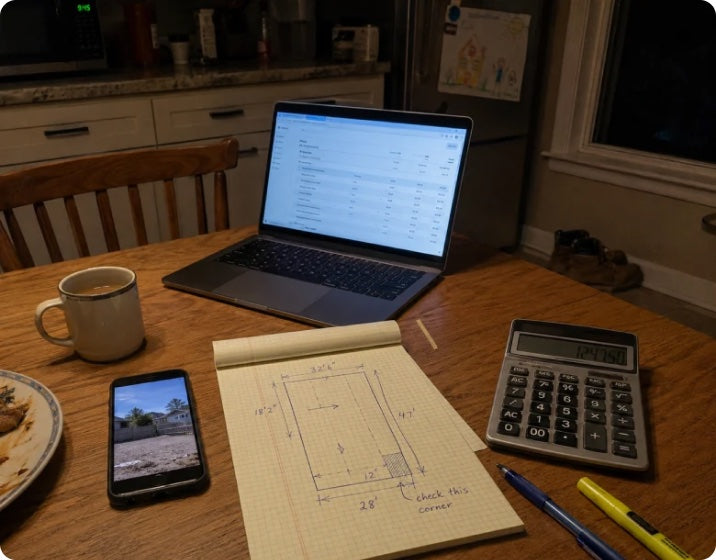
Some contractors spend their evening building the quote. Others send it before the client's made dinner.
Contractor A’s notepad of measurements and sketches rides home with him after a day out on site.
After dinner, it’s time to turn those measurements and sketches into something usable.
There’s that one awkward corner he couldn’t quite access with the wheel, so he prices it safely.
His quote will land tomorrow. But it doesn’t have to be this way.
Contractor B’s quote lands just an hour after the site visit, while the conversation is still warm.
But speed isn’t the part that ultimately wins the job.
3. The quotes land: but the client decided yesterday
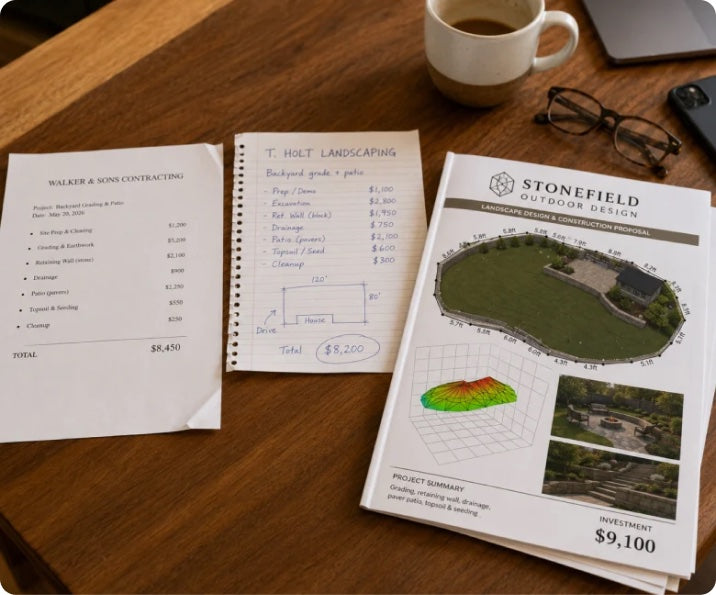
Three bids on the table. Only one showed the client their own yard.
By now, there are three bids. But only one stands out.
Contractor A’s estimate sits alongside another spreadsheet quote they have already got.
But Contractor B’s has already been sitting in their inbox, complete with fully dimensioned plans of the yard. The drainage is mapped out. He’s even labelled the spot they talked about that catches the evening sun.
The client has heard the nightmare stories.
Contractors who disappear. Jobs that overrun. Deposits that vanish.
They can’t afford for a $9,000 project to go wrong.
And only one bid feels like it won’t.
In fact, the client had practically decided before Contractor A’s quote even arrived.
Contractor A was $400 cheaper.
It didn’t matter.
The truth: most contractors aren’t bad at all three
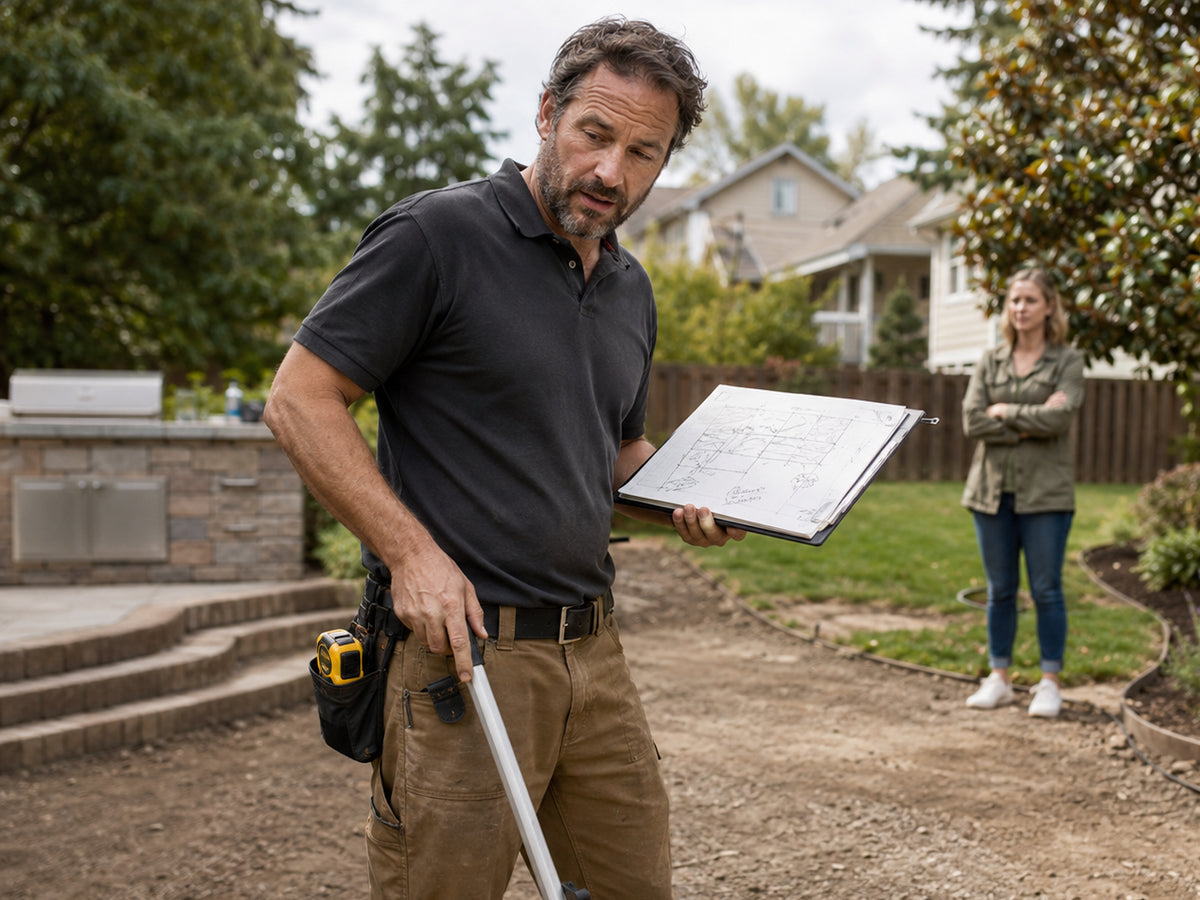
Is your focus on the client or your take-off?
Maybe you’re brilliant with customers on site, but quotes still take two or three days to get out.
Maybe you’re fast, but what lands in the client’s inbox still looks like every other spreadsheet they’ve received.
Or maybe you know you should spend more time talking through the job, but you’re too busy measuring, sketching and making sure you haven’t missed anything.
These aren’t really three separate problems.
They all start with what happens while you’re measuring the site.
What if measuring didn’t take you out of the conversation?
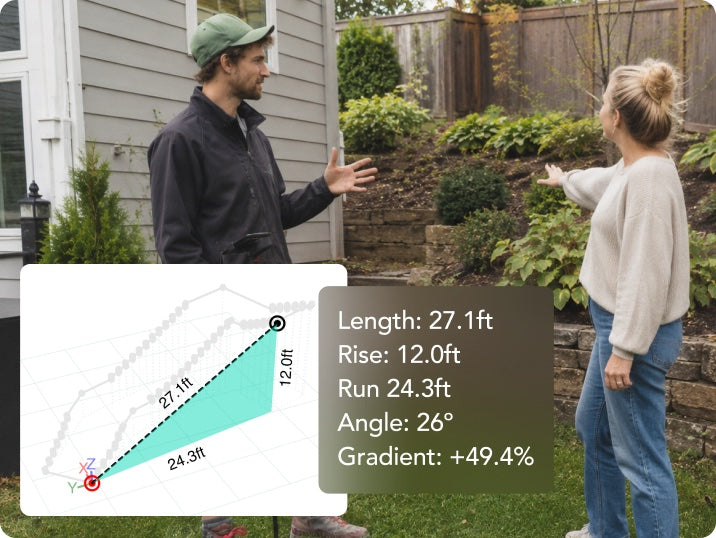
Gather instant site data whilst talking the client through the job.
The traditional way of measuring creates work at every stage.
You measure.
You sketch.
You write the numbers down.
Then later, you turn all of that back into something you can actually quote from.
That’s exactly the workflow Moasure was built to replace.
How Moasure helps you win before price even matters
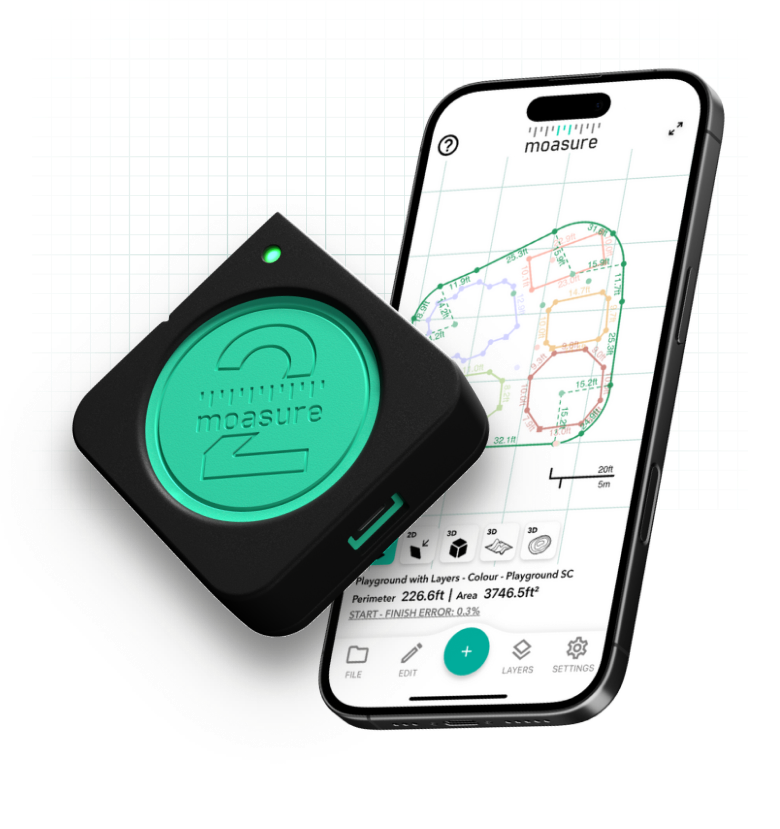
Measure and draw site plans in realtime with Moasure 2 PRO.
Instead of measuring first and drawing later, Moasure measures and draws the site at the same time.
So while you move around the job, you’re building a digital drawing of the site in real time.
That means you can spend less of the site visit buried in a notepad and more of it talking to the person standing in front of you.
When you leave, the drawing is already there.
And instead of starting from a page of handwritten measurements, you’ve already got something you can work from, export and include in the quote.
So the same tool helps with all three moments:
Be more present on site
Spend less time juggling a tape, wheel, and notepad. And spend more time engaging with and closing your client.
Get quotes out faster
Leave the site with the measurements and drawing done, so the quote can land while the conversation is still warm.
Send a bid that looks like you’ve got it handled.
Include professional site plans and drawings instead of sending another spreadsheet on its own.
One change to how you measure can change the entire experience of buying from you.
See how Moasure worksP.S. Think your customers only care about price?
Some will.
But when a homeowner is deciding who to trust with a $9,000 project, cheapest and safest don’t always feel like the same thing.
The contractor who looks prepared, responds quickly and makes the job easy to understand gives them a reason to choose on something other than price.
That’s the part of the bid Moasure can help change.